
Why do we feel the urge to squish cute things?
The short answer
Cute aggression is thought to be your brain's way of balancing out an emotional overload so you stay functional enough to actually care for the thing you're fawning over.
The long answer
Have you ever spotted a baby with those adorable chubby cheeks and felt the urge to…squish them? Maybe you’ve felt an urge to bite them or crush them. Well, you’re not alone.

Source
This phenomenon, known as “cute aggression,” is the paradoxical pairing of intense adoration with aggressive impulses triggered by the sight of an adorable child or baby animal.
There are two theories that explain why we feel the urge to squish cute things, likely working in tandem.
Theory #1: Cute aggression may help regulate overwhelming positive emotion.
Cute aggression is considered a “dimorphous expression,” which is basically when you feel an intensely positive emotion that triggers an expression more commonly associated with a negative emotion, or vice versa. For example, crying when you laugh hard, yelling when you feel intensely happy, and laughing when you're nervous are all dimorphous expressions.

Aggressively celebrating, crying tears of joy, and nervous laughter are all examples of dimorphous expressions.
Left: "Noel Barrionuevo (4845246599)" by Noel Barrionuevo is licensed under CC BY 2.0. Top right: "Fatemeh Motamed-Arya 0" by Hamed Malekpour is licensed under CC BY 4.0. Bottom right: Source.
It’s thought that dimorphous expressions, including cute aggression, occur when you reach a limit of a positive or negative emotion that your body can’t quite sustain, so it balances things out with a contrasting one. In other words, looking at a puppy literally might be too cute to handle, so our body balances it out with a strangely aggressive feeling.
Theory #2: Cute aggression snaps us back into protective mode.
Cute things, notably human babies, are small, weak, and in need of constant protection. So over the course of evolution, we've become hardwired to feel positive emotions when we come across cute, baby-like features (big eyes, round cheeks, etc.). When we see a cute thing, it triggers a flood of feel-good brain chemicals like dopamine and oxytocin.
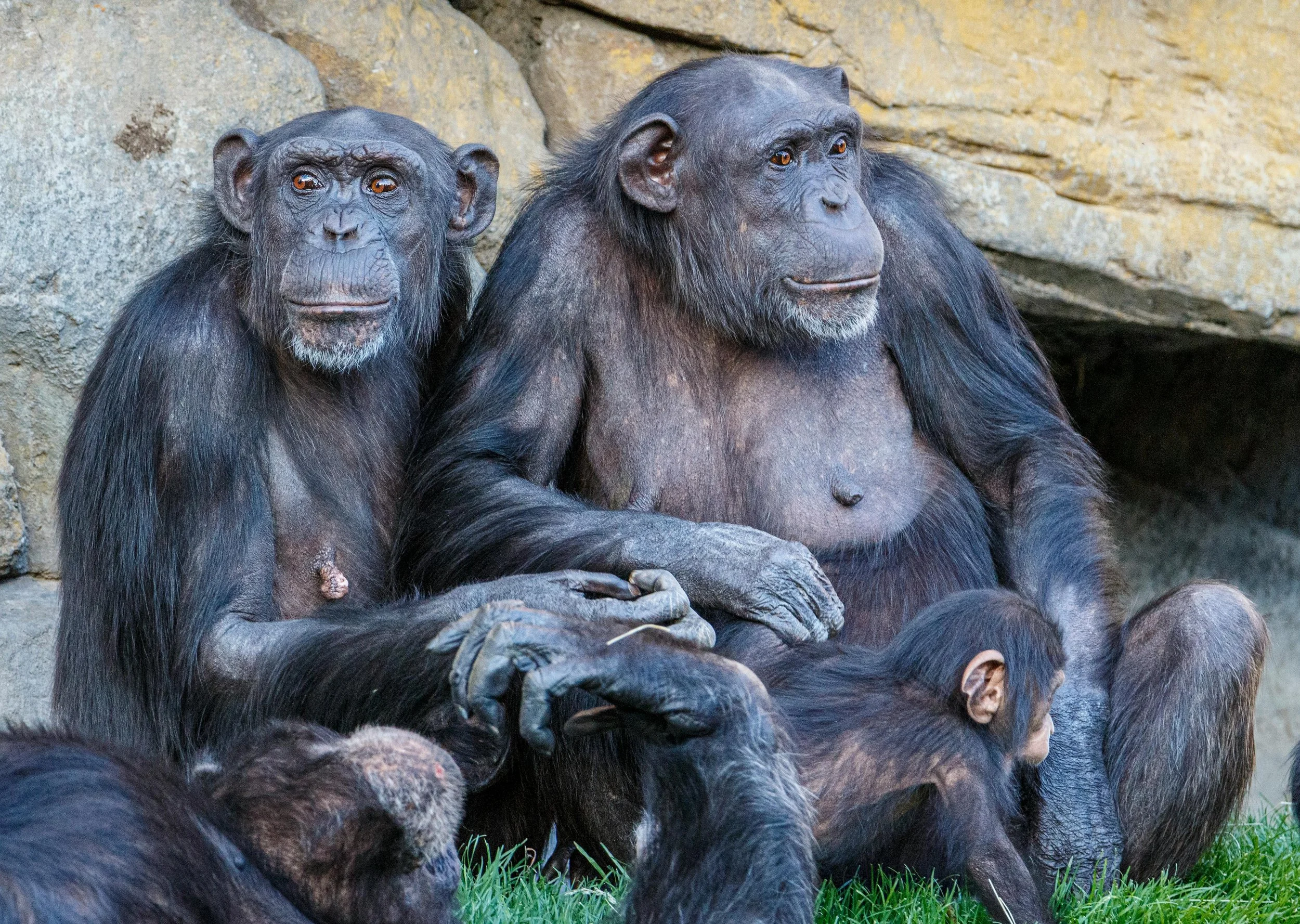
Chimpanzee adults watching over a baby.
Source: Guerrero De la Luz
But there can be too much of a good thing: If caretakers get too swept up in how adorable their baby is, they might be less vigilant to potential threats. The theory goes that cute aggression might be our brain's way of dialing down the overwhelming feeling of adoration and snapping us back into the actual job of keeping the little one safe.
Curious about how the world works?
Today You Should Know is a free, weekly email newsletter designed to help you learn something new every Friday.
Subscribe today 👇
Check out some other curious questions:


Sources
Aragón, O. R., Clark, M. S., Dyer, R. L., & Bargh, J. A. (2015). Dimorphous expressions of positive emotion: Displays of both care and aggression in response to cute stimuli. Psychological Science, 26(3), 259–273. https://doi.org/10.1177/0956797614561044
Carter, C. S. (2017). The oxytocin–vasopressin pathway in the context of love and fear. Frontiers in Endocrinology, 8. https://doi.org/10.3389/fendo.2017.00356
Knight, B. (2024, February 11). Cute aggression: Why you might want to squash every adorable thing you see. UNSW. https://www.unsw.edu.au/newsroom/news/2024/02/cute-aggression-why-you-might-want-to-squash-every-adorable-thing-you-see
Kringelbach, M. L. (2016, July 4). How cute things hijack our brains and drive behaviour. The Independent. https://www.the-independent.com/news/science/how-cute-things-hijack-our-brains-and-drive-behaviour-a7120296.html
Stavropoulos, K. K., & Alba, L. A. (2018). “it’s so cute I could crush it!”: Understanding neural mechanisms of cute aggression. Frontiers in Behavioral Neuroscience, 12. https://doi.org/10.3389/fnbeh.2018.00300

.jpg)

We Americans sure do like American things.